You raised a trout.
Then you let it go.
It started as an egg in your classroom in the late fall. In the spring it swam out of your hands into the Lower Illinois River. Here's what happens to it now, and how you can come back and find it.
See what's next →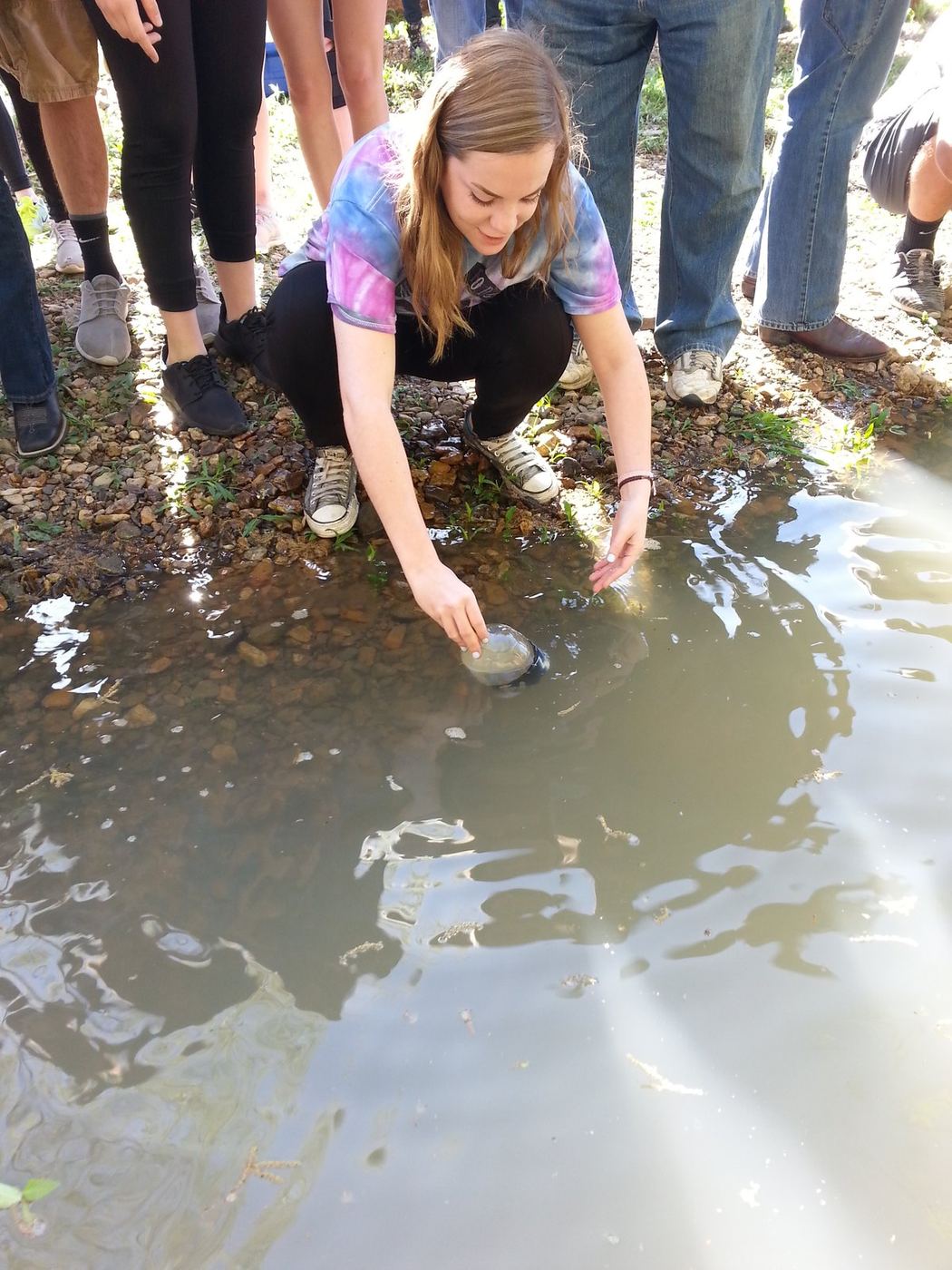 The moment it stops being yours.
From Egg to River
You and your classmates kept a tank of trout alive for several months. That is genuinely difficult. Keeping the water quality high is the goal. Here's the journey your trout took.
Egg
Tiny orange eggs arrive in late fall. Cold, clean water is everything to the tiny embryo.
Alevin
They hatch still carrying a yolk sac, like a packed lunch. They hide on the bottom and don't eat yet.
Swim-up fry
The yolk runs out and they rise up to feed for the first time. This is a critical time in the trout's early life.
Fingerling
About as long as your finger. Finally strong enough for a real river with real current.
Released
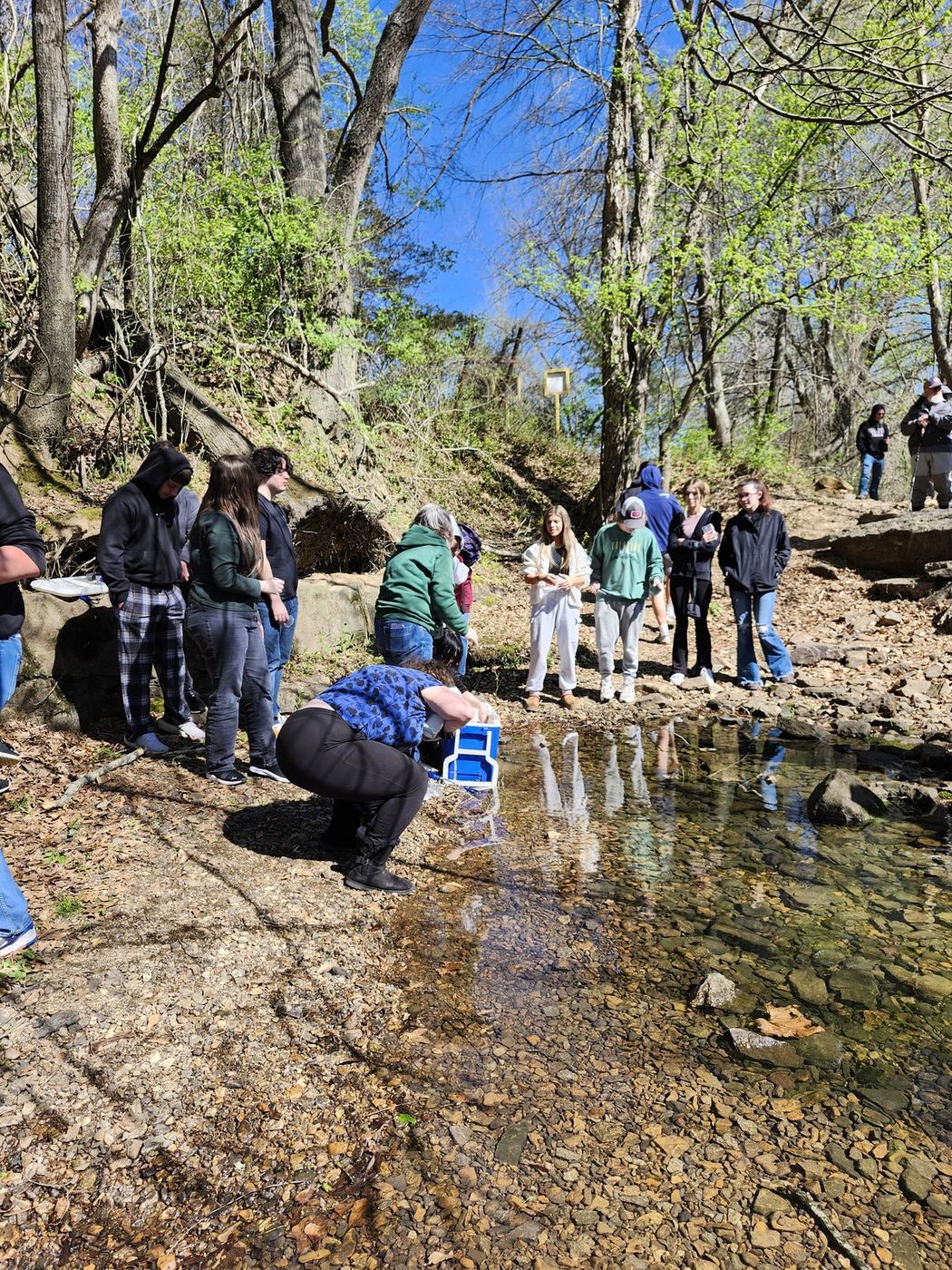
You carried it down to the water and opened your hand. From here it's on its own.
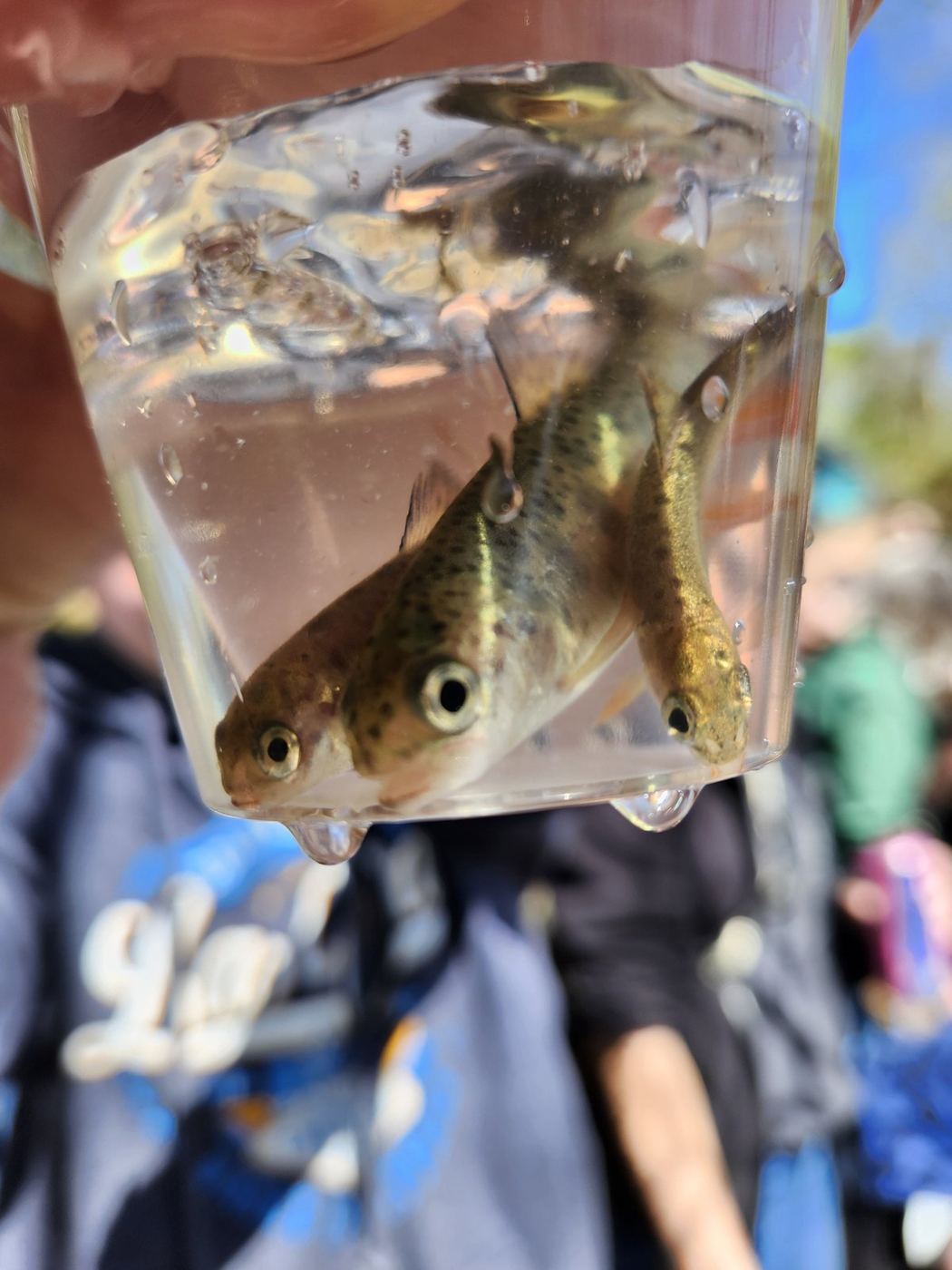 Yours, minutes before release.
Most of them won't make it. That's what makes yours matter.
In a wild stream, a female trout lays 3,000 to 5,000 eggs. Only two or three will live long enough to have babies of their own. It's nature's law of survival of the fittest. That's not sad, it's how nature and a river work.
So, the fish you let go is already a survivor. It got further than almost any wild egg ever does, because for a few months you were the one keeping their water cold and clean.
The Lower Illinois River
Your trout now lives below Tenkiller Dam, near Gore, Oklahoma. Water drawn from the bottom of that lake stays cold all year, and that is the only reason trout can survive in Oklahoma at all.
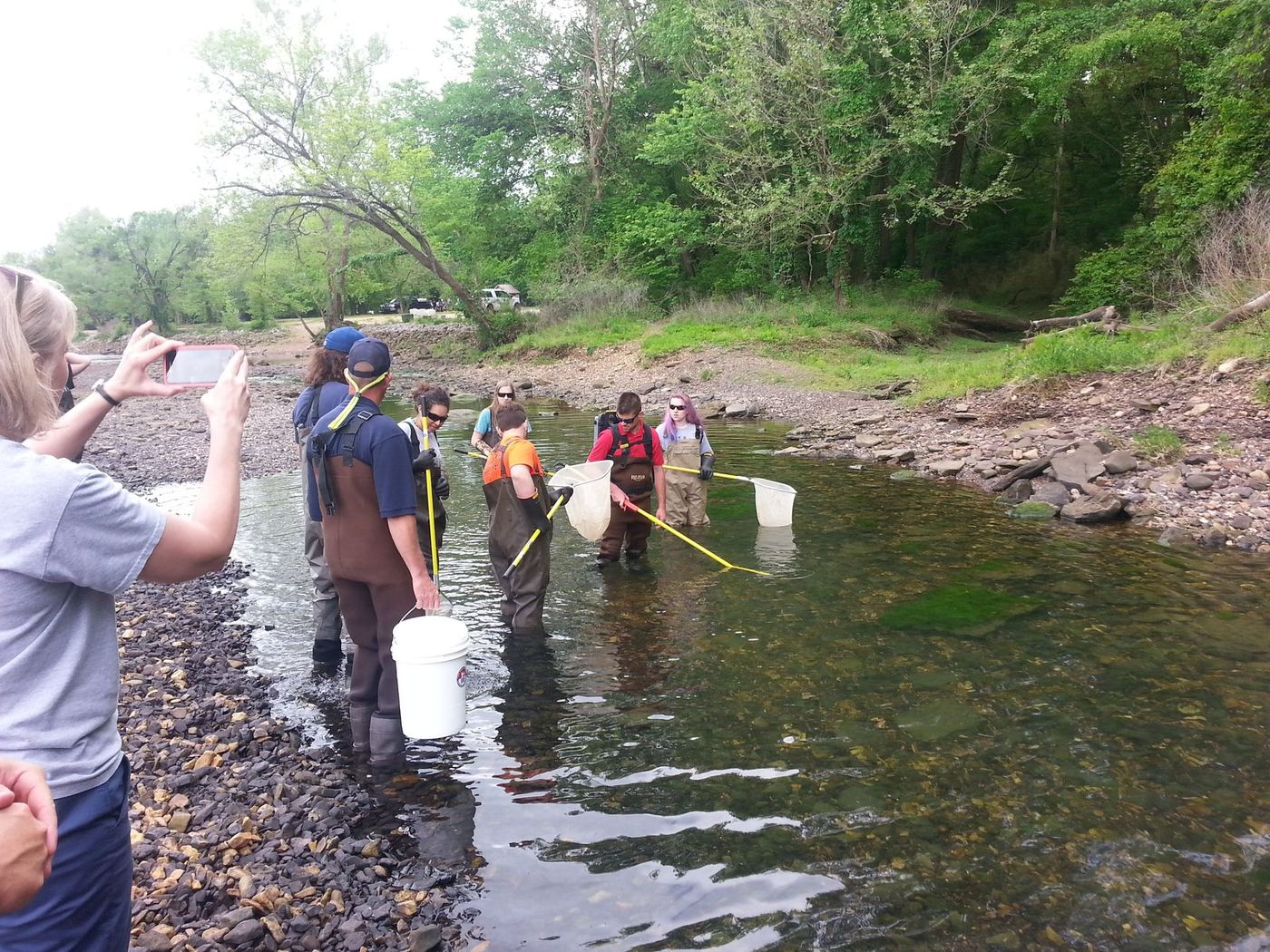
It will eat the same bugs you studied on your journey to the river: mayflies, caddisflies, stoneflies, scuds. It now shares the river with darters, sunfish, sand bass and striped bass. Plus, you took notice of the birds and plants that thrive in the river valley.
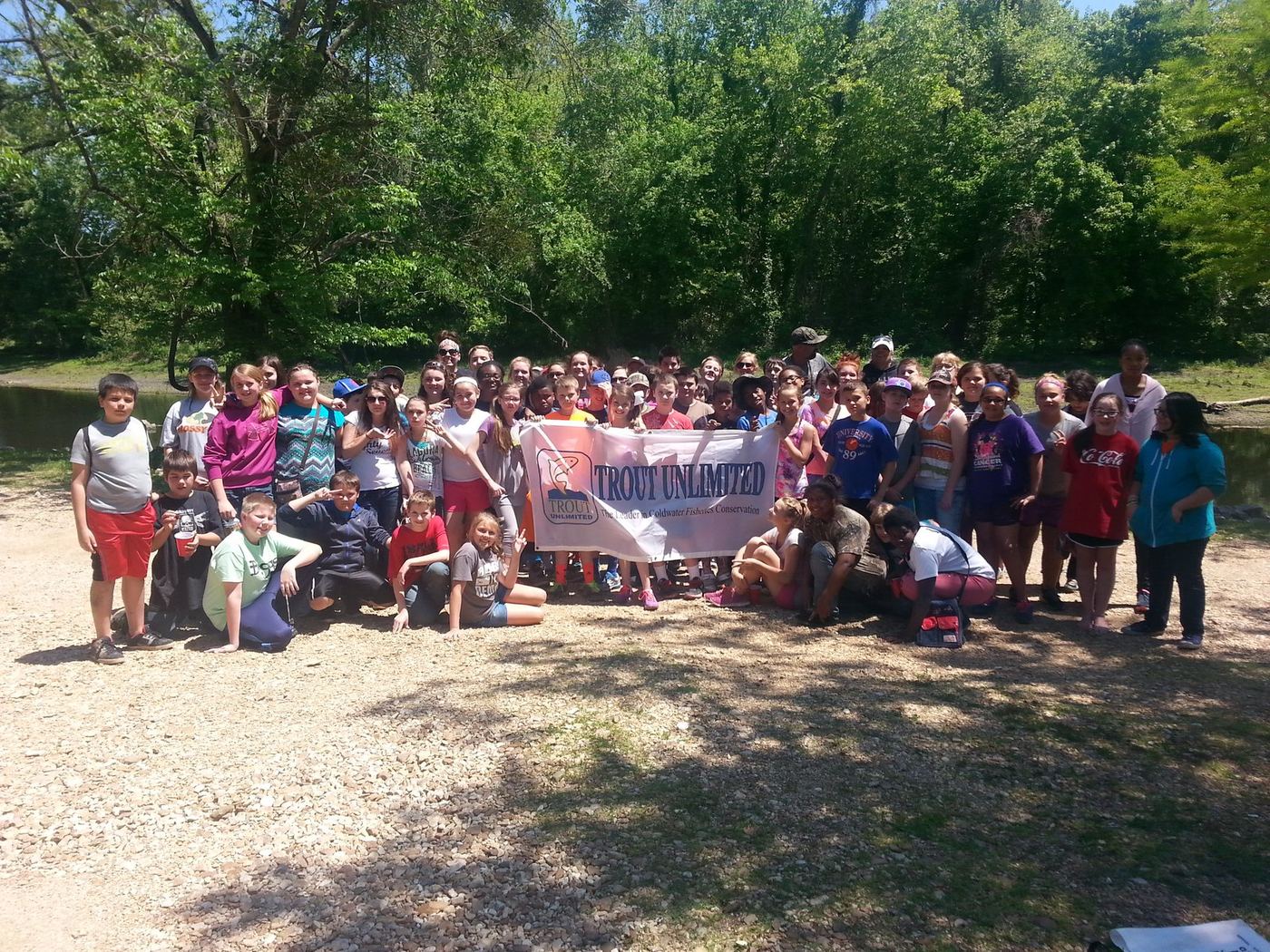
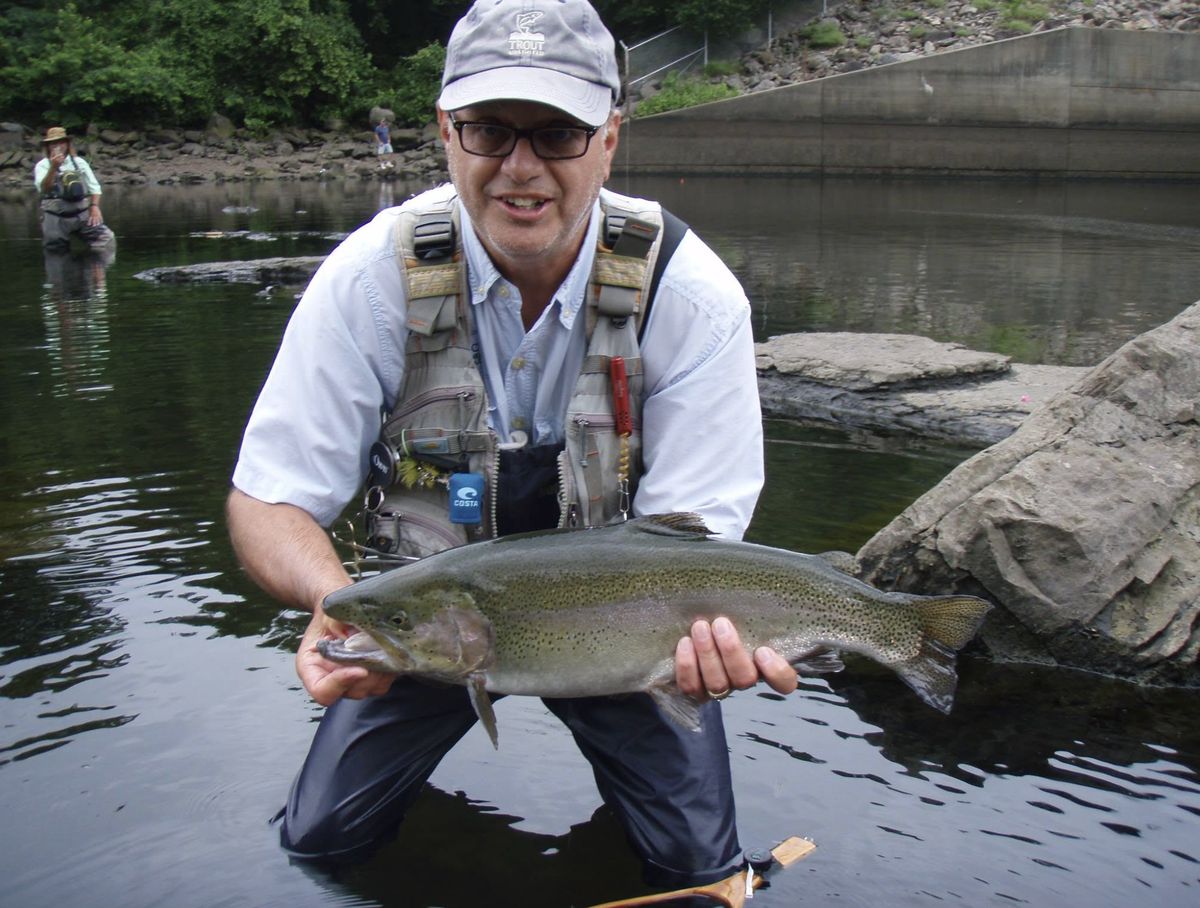
You can go back. The Watts Wildlife Management Unit (WMU) where you released your trout is a public area. All are welcome to walk in and enjoy the cool water and maybe catch a trout. Could it possibly be the one you released? Maybe, just maybe.
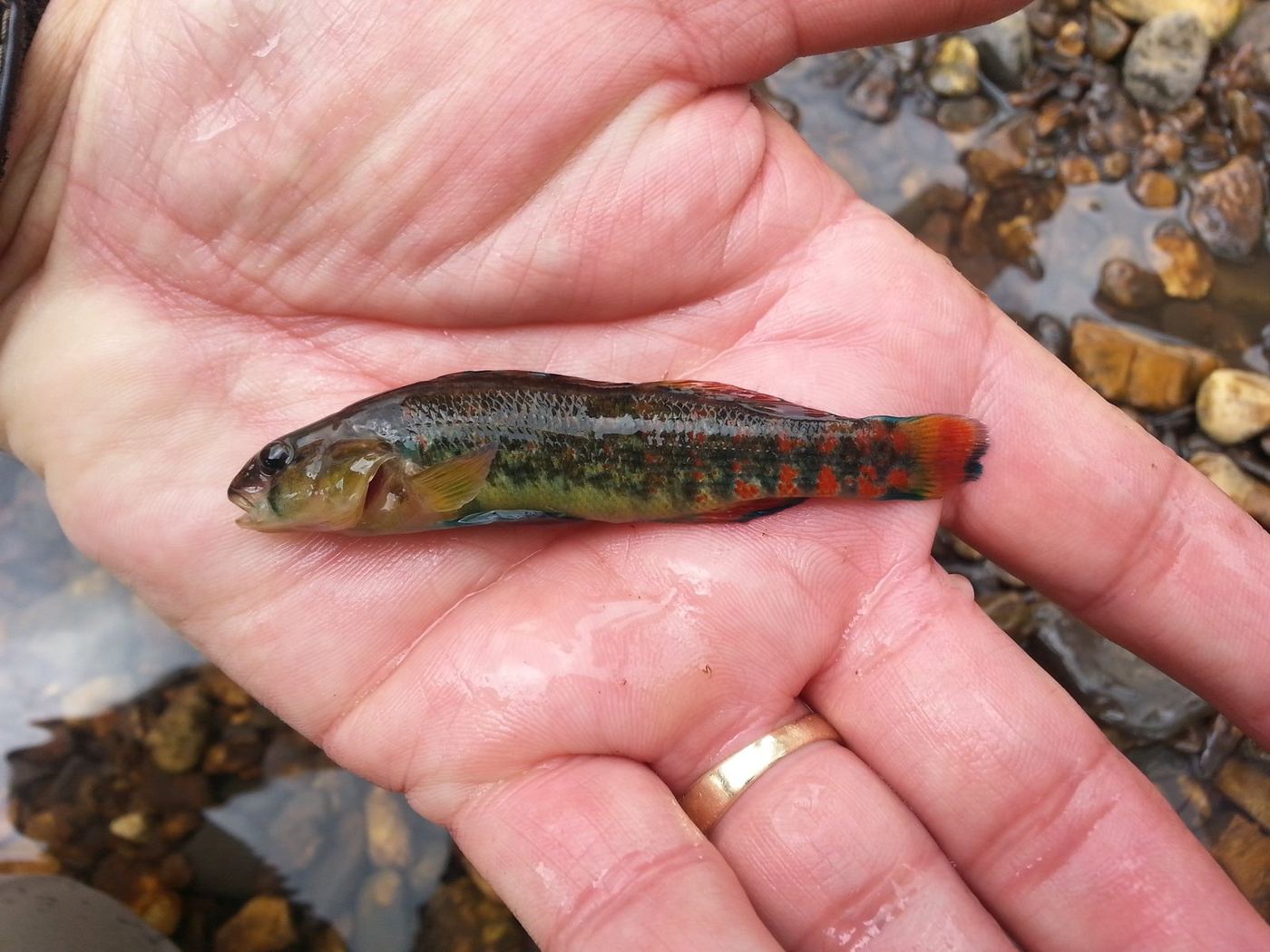 A male orange throat darter from the same river. Not everything in there is a trout.
You probably met Scott Hood
Scott, and a team of volunteers from the Dave Whitlock Chapter, is the reason your classroom had a tank at all. They installed the aquarium and the chiller, the machine that keeps the water cold enough for trout to survive in a room that is nowhere near a river. Then they keep it maintained all year, checking on it and fixing it whenever something goes wrong.
They answer many questions along the way, and many volunteers are at the river on release day. They do this for classroom after classroom, every single year, for over a decade. It's a labor of love for volunteer members of the chapter who decided a long time ago that kids should get to watch this happen up close.
If your trout made it to the river, Scott and the team of volunteers had a hand in it. Say thanks the next time you see a Trout Unlimited member.
Nobody remembers a worksheet about trout. They remember the day they let one go.
15 Fish to Find in Oklahoma
Every summer our members try to catch all fifteen of these. It takes most of them all season. Print this out and start your own list, you've got your whole life.
You don't need to own anything
Every outing we run has spare rods and somebody happy to teach you. Kids are welcome. Parents who have never held a fly rod are extremely welcome.
Who put this on?
We're TU420, the Dave Whitlock Chapter of Trout Unlimited, here in Tulsa, OK. Trout In The Classroom is run start to finish by volunteers from the chapter and paid for with raffle tickets, private donations and various fundraisers throughout the year. Nobody gets paid for this. Volunteers install and maintain the classroom aquariums and chillers, keep them running all season, and many are there on release day.
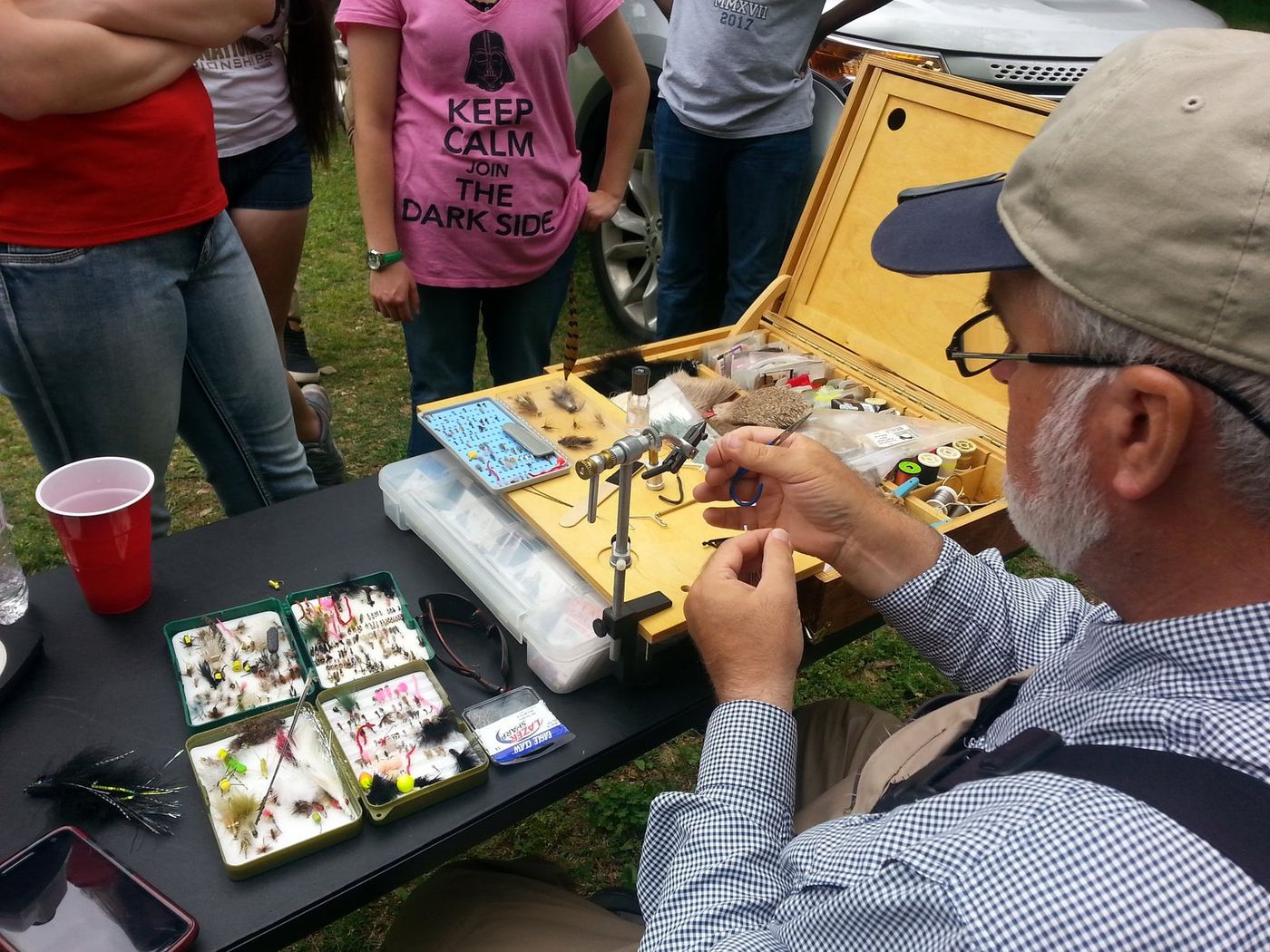
We also do river clean-ups, water quality monitoring, free fly-tying nights, and beginner fly fishing clinics. If today landed well with your child and they can't stop talking about it, you need to know that most of what we do is open to families and costs nothing to attend.
Stay in the loop
A short note each month about family-friendly outings, clinics, and release days. No pressure to join anything.
We never share your email. Unsubscribe any time.
What It Looks Like